
post
Managing Moderate Cancer Pain
The Role of Medication in Managing Moderate Cancer Pain: An Overview of Options and Best Practices
Cancer pain is one of the most debilitating symptoms faced by patients, profoundly impacting quality of life, mental well-being, and treatment adherence. Pain management is not a secondary concern; it is a fundamental part of comprehensive cancer care. When pain is classified as moderate, it signals a transition point a stage where over-the-counter options are insufficient, but the highest potency opioids might not yet be necessary. So we are going to discuss also on how to Managing Moderate Cancer Pain.
Effective managing moderate cancer pain requires a strategic, individualized, and multi-modal approach, with medication playing the central and most crucial role. This comprehensive guide details the pharmacological options, best practices, and essential principles necessary for optimally managing moderate cancer pain to ensure comfort and dignity for every patient.
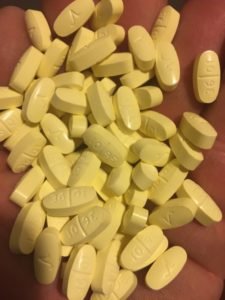
Understanding Moderate Pain and the WHO Analgesic Ladder
To effectively discuss managing moderate cancer pain, we must first define it. Clinicians typically use a pain intensity scale (such as a 0 to 10 numerical rating scale, or NRS) where:
- Mild Pain: $1-3$
- Moderate Pain: $4-6$
- Severe Pain: $7-10$
Moderate pain significantly interferes with activities of daily living, sleep, and mood, but it can still be managed with a combination of specific pharmacological agents.
The WHO Three-Step Analgesic Ladder
The World Health Organization (WHO) established the Analgesic Ladder in 1986, which remains the cornerstone for global cancer pain management. Managing moderate cancer pain sits squarely on Step 2 of this ladder:
| Step | Pain Intensity | Medications Used | Focus |
| Step 1 | Mild (1-3) | Non-opioids (e.g., NSAIDs, Acetaminophen) | Non-Opioids |
| Step 2 | Moderate (4-6) | Weak Opioids (e.g., Codeine, Tramadol) PLUS Non-opioids | Weak Opioids |
| Step 3 | Severe (7-10) | Strong Opioids (e.g., Morphine, Oxycodone, Fentanyl) $\pm$ Non-opioids | Strong Opioids |
The goal of managing moderate cancer pain is to provide around-the-clock relief while minimizing side effects, often achieved by combining a weak opioid with a non-opioid baseline medication.
Step 2: Key Medication Options for Managing Moderate Cancer Pain
The primary pharmacological strategy for managing moderate cancer pain involves the controlled use of weak opioids, always in conjunction with non-opioid agents.
1. Weak Opioids
These agents have a ceiling effect for pain relief (meaning increasing the dose beyond a certain point does not increase analgesia but does increase side effects) and are designed to bridge the gap between simple non-opioids and powerful narcotics.
- Tramadol:
- Mechanism: Unique because it acts as a weak opioid agonist, and it inhibits the reuptake of norepinephrine and serotonin. This dual mechanism is often very effective for mixed pain types (nociceptive and neuropathic components).
- Best Practice: Titrated slowly to minimize side effects like nausea and dizziness. Careful use is needed in patients taking SSRIs due to the risk of serotonin syndrome.
- Codeine:
- Mechanism: A prodrug that is metabolized in the liver by the CYP2D6 enzyme into active morphine.
- Best Practice: Its efficacy is highly variable due to genetic polymorphism in the CYP2D6 enzyme. Some people (ultrarapid metabolizers) experience profound effects, while others (poor metabolizers) receive little to no benefit. Due to this unpredictability, its use is declining in oncology settings.
- Hydrocodone:
- Mechanism: A semisynthetic opioid that acts as a $\mu$-opioid receptor agonist. Often formulated in combination with acetaminophen (e.g., Vicodin, Norco).
- Best Practice: When used, the focus is on monitoring the total daily limit of the non-opioid component (acetaminophen) to prevent liver toxicity.
2. Non-Opioids (The Foundation)
Non-opioid analgesics are essential in managing moderate cancer pain because they work through different mechanisms than opioids, creating a synergistic or opioid-sparing effect.
- Acetaminophen (Paracetamol):
- Role: Excellent for mild to moderate musculoskeletal and nociceptive pain. It has no anti-inflammatory action but is valuable for its consistent analgesic and antipyretic (fever-reducing) properties.
- Best Practice: Should be given around-the-clock (scheduled dosing) at a dose often up to $1000 \text{ mg}$ every 6 hours, ensuring the total daily dose does not exceed $3000-4000 \text{ mg}$ to protect the liver.
- Nonsteroidal Anti-inflammatory Drugs (NSAIDs):
- Examples: Ibuprofen, Naproxen, Celecoxib.
- Mechanism: Inhibit cyclooxygenase (COX) enzymes, reducing the synthesis of inflammatory mediators (prostaglandins) at the site of injury. They are especially effective for pain related to bone metastases or soft tissue inflammation.
- Best Practice: Should be used cautiously due to potential side effects: increased risk of gastrointestinal bleeding (requires monitoring or co-prescription of a proton pump inhibitor) and renal toxicity, especially in patients with pre-existing kidney issues or those receiving chemotherapy.
3. Adjuvant Analgesics (For Specific Pain Types)
Adjuvants are medications that are not primarily analgesics but enhance the effect of pain medications or treat specific types of pain, crucial when managing moderate cancer pain that has a neuropathic component (nerve pain).
| Pain Type | Adjuvant Medication Class | Examples |
| Neuropathic Pain (e.g., tingling, burning, shooting) | Anticonvulsants | Gabapentin, Pregabalin |
| Neuropathic Pain / Bone Pain | Tricyclic Antidepressants (TCAs) | Nortriptyline |
| Inflammatory Pain / Bone Pain | Corticosteroids | Dexamethasone |
Best Practices and Principles for Managing Moderate Cancer Pain
A successful pain management regimen is defined by how well it adheres to established clinical guidelines. Managing moderate cancer pain is guided by these principles:
1. Dosing: Fixed Schedule vs. PRN
The most critical principle is scheduled, around-the-clock dosing rather than “as needed” (PRN).
- Fixed Schedule: Medications are given at regular intervals (e.g., every 4, 6, or 8 hours) to maintain a steady concentration of the drug in the blood. This prevents pain from escalating to severe levels and interrupts the cycle of pain $\rightarrow$ suffering $\rightarrow$ anxiety.
- PRN Use: PRN medication should only be used for breakthrough pain a temporary flare-up of pain that occurs despite the baseline scheduled regimen. The PRN dose should ideally be $10-15\%$ of the total 24-hour scheduled opioid dose, and the clinician should track how often it is needed, which indicates if the scheduled dose needs adjustment.
2. Titration and Individualization
Pain relief is highly subjective, and every patient metabolizes medication differently.
- Start Low, Go Slow: Doses are typically started low and titrated (gradually increased) until adequate pain relief is achieved, or side effects become intolerable.
- Individualized Therapy: No single protocol fits all. Managing moderate cancer pain requires continuous reassessment. If a weak opioid fails to provide adequate relief, the logical next step is to move the patient to Step 3 (strong opioids), not simply increase the dose of the weak opioid indefinitely.
3. Anticipating and Managing Side Effects
Side effects from opioids are common, but they are predictable and manageable. Failing to address them is poor clinical practice and can lead to non-adherence.
- Constipation: This is the most common and persistent side effect and requires proactive management, not reactive treatment. A bowel regimen (stimulant laxative $\pm$ stool softener) should be initiated when the opioid regimen begins and continued throughout treatment.
- Nausea/Vomiting: Often occurs when starting an opioid or increasing the dose. This can usually be managed with antiemetic medications (e.g., ondansetron) and typically subsides within a few days.
- Sedation: Mild sedation is common upon initiation. If severe or persistent, it signals that the dose may be too high or that another cause (like sleep deprivation or other medications) should be investigated.
4. Continuous Reassessment and Documentation
Pain is dynamic, especially in cancer patients. Tumors can grow, bone lesions can change, and treatments can cause new nerve damage.
- Frequent Evaluation: The pain regimen must be re-evaluated frequently (daily or weekly, depending on the setting) to ensure efficacy.
- Pain Documentation: Clinicians use tools like the PQRST assessment: Provoking/Palliating factors, Quality (e.g., sharp, dull, burning), Region/Radiation, Severity (NRS score), and Timing (duration and frequency). Consistent documentation ensures continuity of care.
The Transition from Step 2 to Step 3: When Moderate Becomes Severe
A key part of managing moderate cancer pain is recognizing when the current treatment plan has failed and when it’s time to transition to Step 3 (strong opioids).
Indicators to Move Up the Ladder
- Inadequate Relief: If a patient is on the maximum recommended doses of weak opioids and non-opioids but still reports a pain score of $\ge 7$ or cannot function due to pain.
- High Breakthrough Pain Use: If the patient requires four or more breakthrough doses per day, it suggests the baseline scheduled medication is insufficient.
- Intolerable Side Effects: If the patient experiences severe side effects (e.g., unmanageable dizziness or nausea) from the weak opioid, it’s often safer and more effective to switch to a strong opioid at a lower, equivalent dose.
The goal is always to use the minimum effective dose of the appropriate analgesic. Strong opioids (e.g., morphine, oxycodone, hydromorphone) are more potent, have no analgesic ceiling, and are highly effective for severe pain, making them the next logical choice when moderate pain management fails.
Conclusion: A Commitment to Comfort
Managing moderate cancer pain effectively is an ethical imperative and a cornerstone of palliative and oncologic care. It is a process that relies on the strategic use of weak opioids combined with scheduled non-opioids and targeted adjuvant medications, all guided by the WHO Analgesic Ladder.
By adhering to best practices scheduled dosing, proactive side effect management, and continuous, individualized titration health care professionals can ensure that patients live with maximum comfort and minimal interference from their symptoms. The commitment to eradicating pain allows patients to focus on their life, their relationships, and their healing, rather than their suffering.

PAIN RELIEF DRUGS
buy pain relief medication online | pain pills for sale online
Have you been looking on where to buy pain relief medication online for longtime now? then you are now at the right place where you can buy pain relief pills online without prescription. We are the best dealers that you can buy pain killers online, buy pain medication online overnight delivery, order pain killers online, buy pain killers uk, buy pain killers online canada, buy pain killers online without prescription, purchase pain medication, purchase pain pills online. Pain Pills for sale online.

How to propose to a girl proposal ideas in Barcelona
навес для машины авто навес заказать